 Made in Scandinavia


SoftSwipe by GP Medical Devices
The gentle way to collect a pinworm sample at home
When a child shows pinworm symptoms, the last thing a parent needs is stress about how to collect a pinworm sample. SoftSwipe was designed to make the at-home pinworm test simple, gentle, and hygienic — while delivering laboratory-ready results that support fast, effective pinworm treatment.
- Soft protective finger-tube for added comfort
- Medical-grade adhesive for secure, gentle use
- Designed to replace outdated collection methods

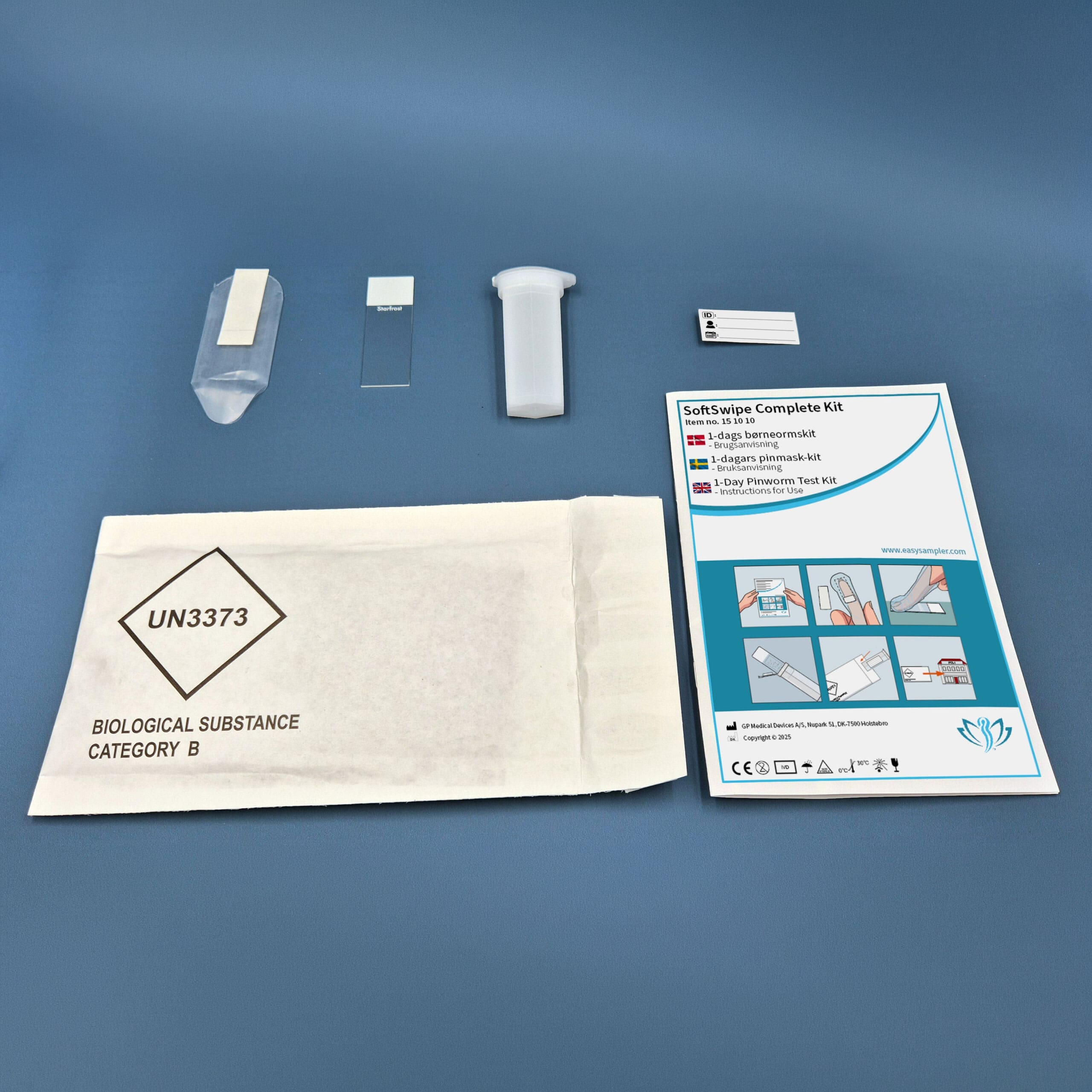
Three perspectives on one problem
Different People – Different Challenges
From parents to healthcare professionals, traditional pinworm sampling creates unnecessary friction throughout the entire process.
SoftSwipe is designed to make collection simpler, clearer, and more reliable for everyone involved.
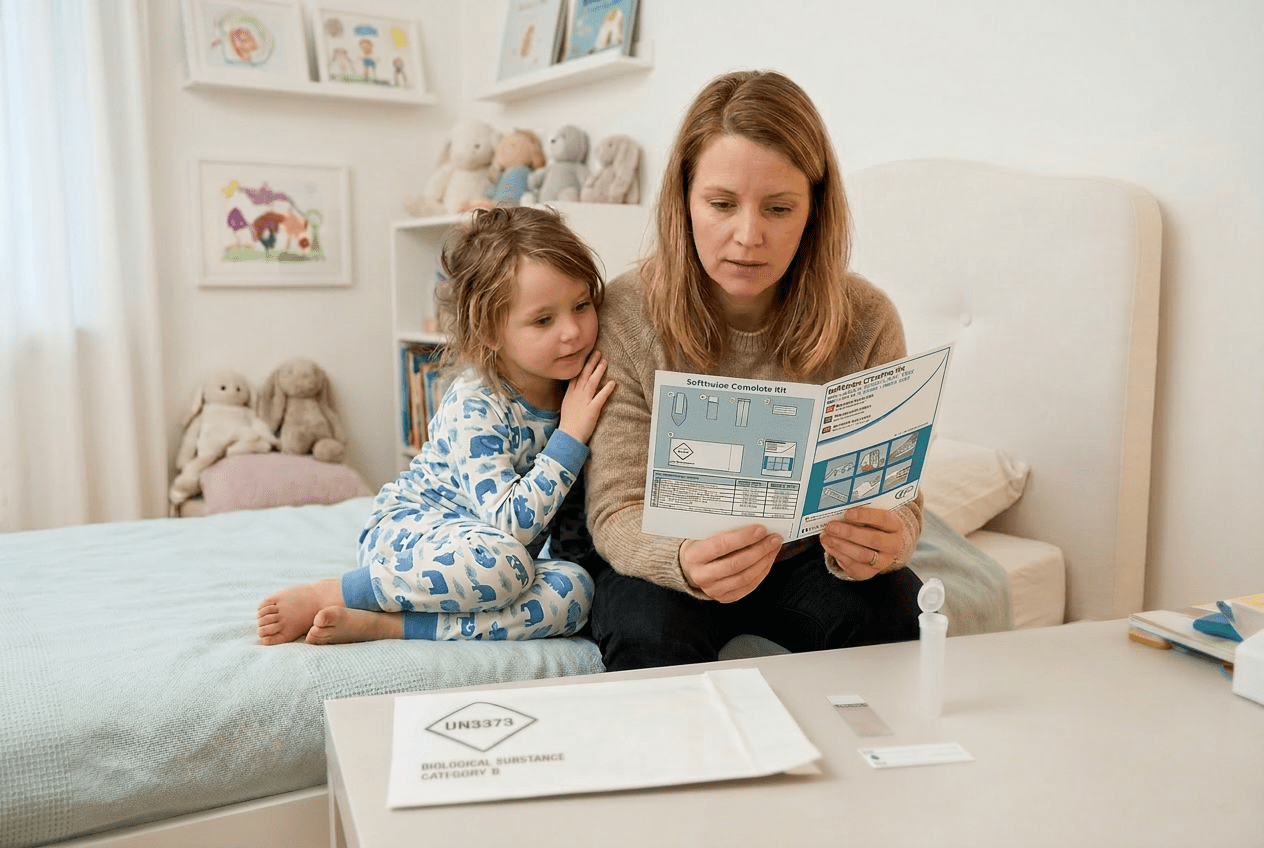
Parent and Child
Taking a pinworm sample is considered stressful due to the intimacy, lack of instructions, soft and hygienic tools and inconvenience in manual sample return.
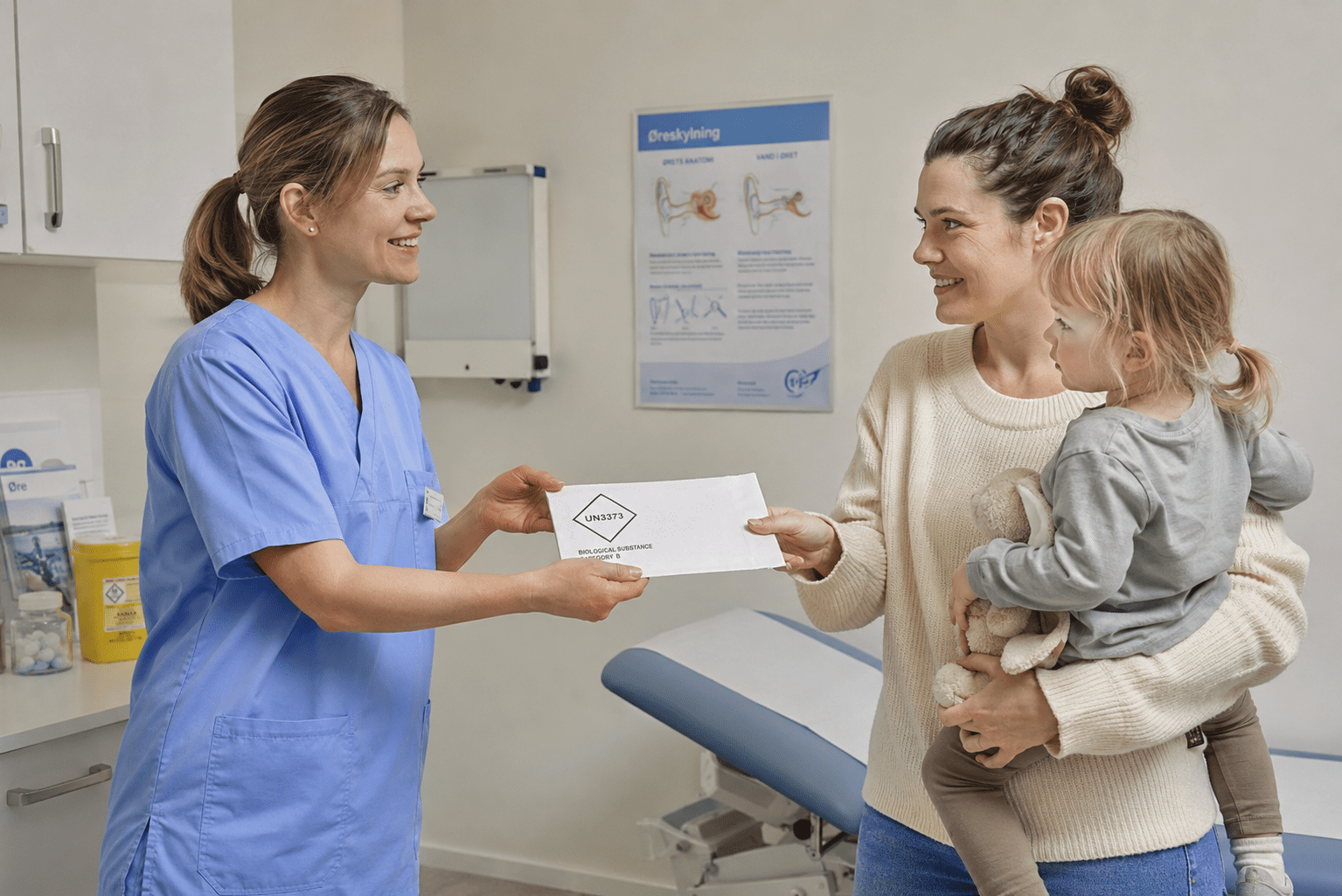
Doctor and Nurse
Verbal instruction of parents and patients takes time and does not eliminate misunderstandings. Re-sampling and side effects from hard collection devices is a risk.

Laboratory
Collected samples may be contaminated or arrive after several days of delay, challenging the analysis and the correct result.
The Solution — Pinworm Kit by GP Medical Devices
Pinworm Kit is a safer, softer, faster and a more accurate solution for everybody
When a child shows pinworm symptoms, parents often worry about how to collect a pinworm sample safely and correctly. SoftSwipe takes stress out of the process. Designed specifically for families, SoftSwipe makes the at-home pinworm test gentle, hygienic and highly reliable—so you can move confidently toward fast, hygienic and correct pinworm testing, diagnosis and treatment.
How it works
01
Put on the soft finger tube
A soft protective material ensures gentle contact while collecting the pinworm sample — no direct skin contact, no abrasive paddle.
02
Touch the area to capture eggs
Medical-grade adhesive picks up everything needed for an accurate pinworm test in a single, controlled pass.
03
Press the tape onto the slide
Place the slide in the included transport tube, seal the UN3373 envelope and send it to the laboratory.
Choose your kit
Standard sample collection kit’s
SoftSwipe Pinworm Sample collection kits that reduce contamination risk, improve user comfort, and streamline laboratory workflows.
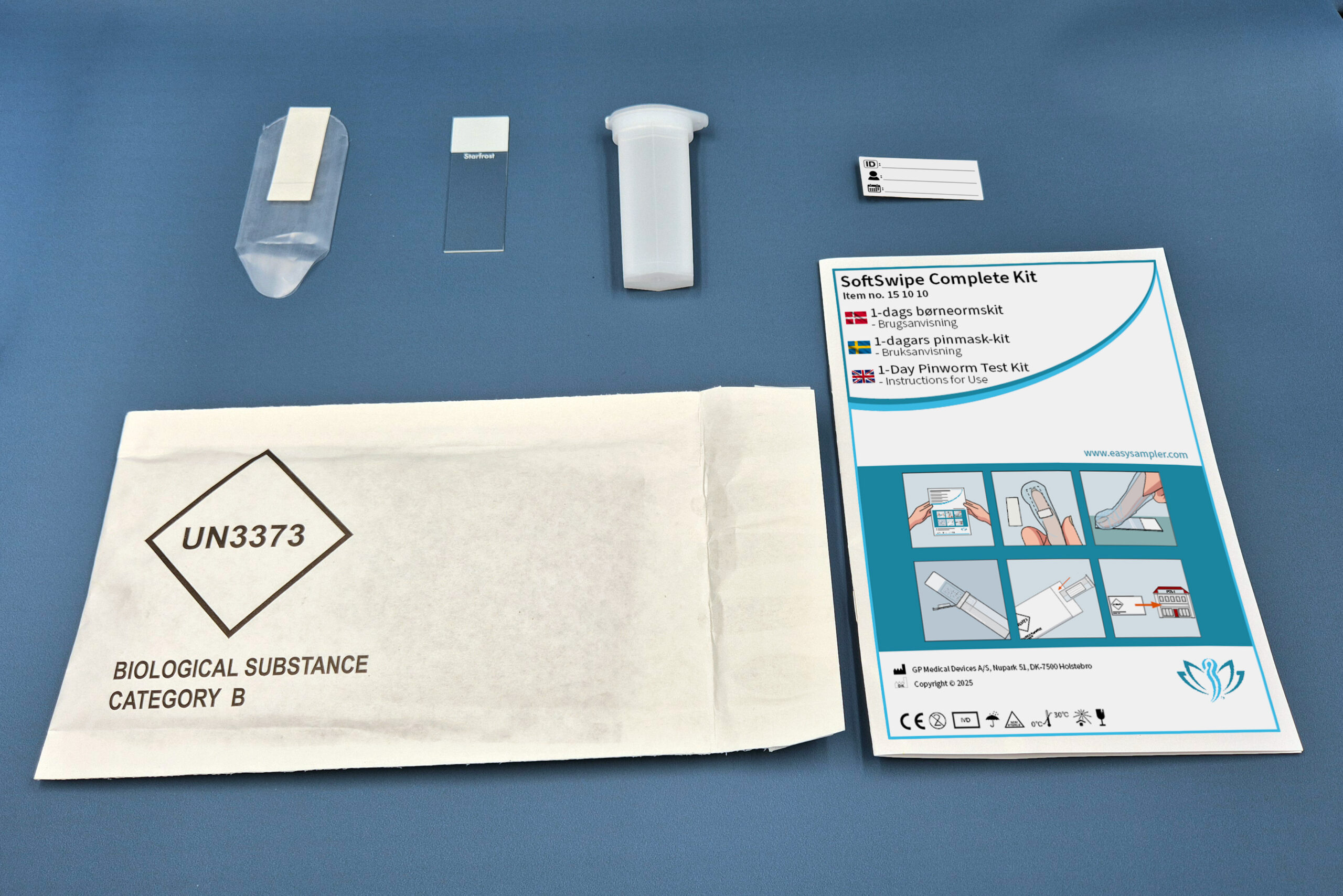
1-Day Pinworm Test Kit with Instruction, Glass Slide and Postal Envelope
SoftSwipe Test Kit with Instruction, SoftSwipe Finger Tube, Glass Slide, Transport Tube and Postal Envelope
1 Transparent LDPE bag containing:
- 1 x SoftSwipe Finger Tube
- 1 x Microscope Glass Slide
- 1 x Patient ID label
- 1 x Mailing Container
- 1 x Return envelope UN3373
- 1 x Printed Instruction for use (Select Language)

3-Day Pinworm Test Kit with Instruction, Glass Slide and Postal Envelope
SoftSwipe Test Kit with Instruction, SoftSwipe Finger Tube, Glass Slide, Transport Tube and Postal Envelope
1 Transparent LDPE bag containing:
- 3 x SoftSwipe Finger Tube
- 3 x Microscope Glass Slide
- 3 x Patient ID label
- 3 x Mailing Container
- 1 x Return envelope UN3373
- 1 x Printed Instruction for use (Select Language)
How the test sample is collected
01
Sample in the morning
Perform the test in the morning, before the child uses the toilet or bathes.
02
Apply the tape
Press the sticky side of transparent tape to the skin around the anus.
03
Transfer to the slide
Place the tape on a microscope slide.
04
Repeat for three mornings
Repeat for three mornings in a row for highest accuracy.
05
Return the sample
Deliver or mail the slide(s) to your doctor or laboratory.
SoftSwipe by GP Medical Devices
Designed and developed for comfort and accuracy
Five reasons families, clinicians and laboratories choose SoftSwipe over traditional “non-soft” collection methods.
01
Gentle and child-friendly
A soft, protective finger tube feels comfortable on the skin — unlike traditional, rigid, “non-soft” methods. This helps reduce anxiety during pinworm infection testing.
02
Hygienic and safe
The protected design keeps the parent’s finger away from sensitive skin and the adhesive surface, helping you collect a cleaner, safer pinworm sample.
03
High-quality sample collection
Medical-grade adhesive ensures the pinworm sample transfers cleanly onto the microscope slide, improving the accuracy of the pinworm test.
04
Clear, simple instructions
Step-by-step guidance shows exactly how to perform the pinworm test — even if this is your first time dealing with a pinworm infection.
05
Ready for the lab
The completed slide goes straight into the included, UN3373-compliant mailing materials — no guesswork, no extra supplies needed. Faster sample return means faster pinworm treatment.
We reply within one working day
Comparison
SoftSwipe vs. traditional “non-soft” methods
See how SoftSwipe compares to traditional “non-soft” collection methods
— from comfort and usability to hygiene and reliability.
Examples of customization
Return address
We print your laboratory’s return address directly on the UN3373 mailing envelope.
Patient ID labels
Tube labels that secure the unique ID of the sample, provided with customized print.
Contact details
Contact information of the health professional, hospital, department or laboratory printed on the kit.
QR codes & web links
A designated webpage or QR code in the instructions that points participants to the right next step.
Languages & pictograms
Standard user guides in multiple languages, or customized pictograms for specific patient groups.
Transport tubes & boxes
Mail- and airmail-approved tubes, transport tubes and boxes — selected to match your laboratory’s analysis equipment.